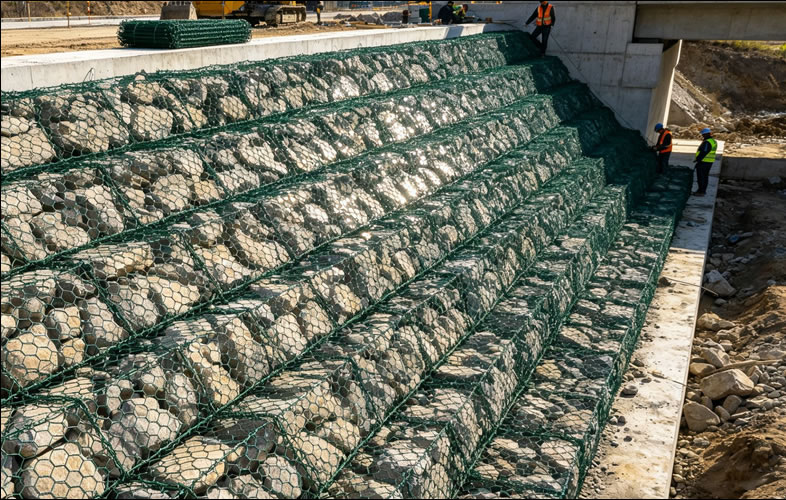
Gabion scour prevention for protecting bridge abutments, piers, and culvert outlets from high-velocity hydraulic turbulence. These flexible, stone-filled wire mesh units are strategically placed as aprons or mattresses at the base of structures to dissipate kinetic energy and prevent the undermining of foundations. Common technical specifications include Galfan or PVC-coated double-twisted hexagonal steel wire mesh, typically in a 6x8 cm or 8x10 cm aperture. For scour aprons, thinner "reno mattresses" (0.17m to 0.3m thickness) are preferred to provide maximum surface area and flexibility. The stone infill usually ranges from 100mm to 200mm, ensuring a porous structure that relieves hydrostatic pressure while resisting displacement.
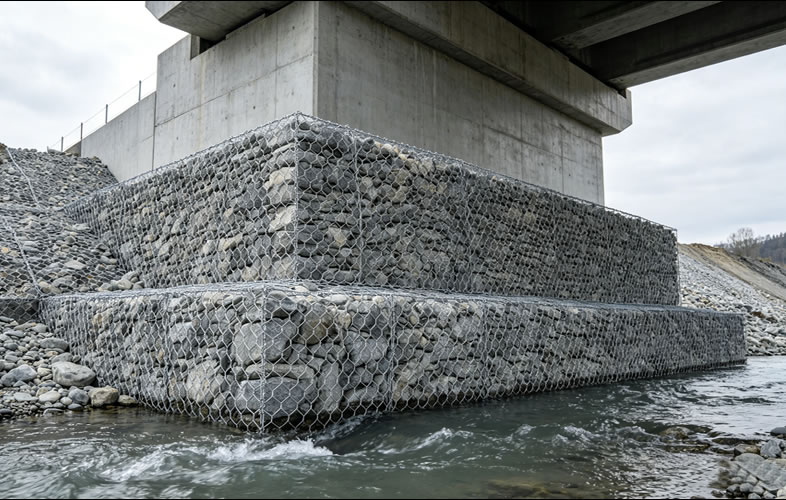
Gabion Scour Prevention for Bridge Abutment Protection
Bridge scour protection project designed to safeguard a multi-span highway bridge over a volatile river system. The structure faced significant risk from foundation undermining due to high-velocity currents and turbulent eddies during peak flood seasons.
Several High-risk Factors:
- Scour Hole Formation: Rapid water flow was displacing natural riverbed sediment at the bridge piers.
- Structural Vulnerability: Significant scouring threatened to expose the pile caps, compromising the bridge's load-bearing capacity.
- Variable Bed Profiles: The shifting riverbed required a solution that could settle and self-conform to new contours without losing structural integrity.
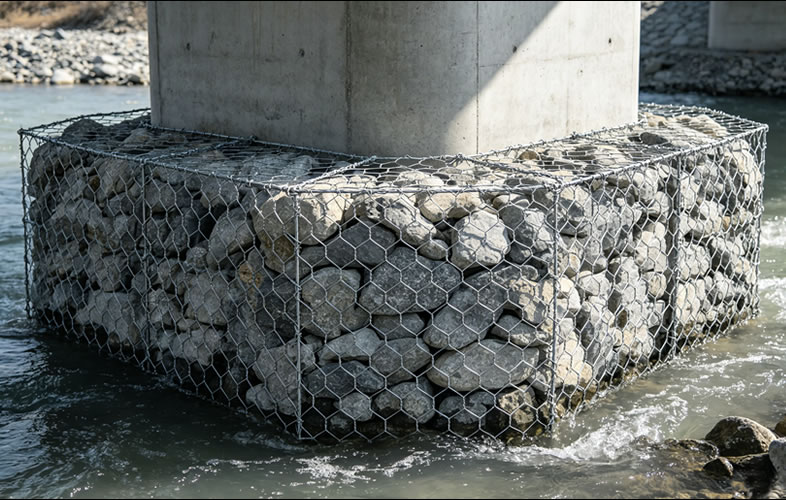
The Solution: Gabion Reno Mattresses and Aprons
To combat these issues, a Gabion Scour Prevention system was implemented. The design utilized thin, flexible Reno mattresses laid horizontally around the piers to act as a protective "armor."
- Technical Specifications: The project used Galfan-coated (95% Zinc, 5% Aluminum) double-twisted wire mesh to ensure a 50-year design life in submerged conditions.
- Dimensions: 6.0m x 2.0m x 0.3m mattresses were laced together to create a continuous, monolithic protective apron.
- Infill Strategy: A graded rock fill (100mm to 150mm) was selected to provide maximum hydraulic roughness, effectively slowing down water velocity at the bed interface.
Results and Long-Term Performance
- Self-Healing Properties: During the first major flood event, the gabion mattresses successfully "folded" into newly formed scour pockets, maintaining a continuous protective layer and preventing further erosion.
- Energy Dissipation: The porous stone surface significantly reduced the kinetic energy of the water, protecting the downstream riverbed from secondary scouring.
- Cost Efficiency: Compared to traditional underwater concrete grouting, the gabion solution reduced material costs by 30% and utilized local labor for assembly.